Watch the full speaker program HERE.
View photos from the event HERE.
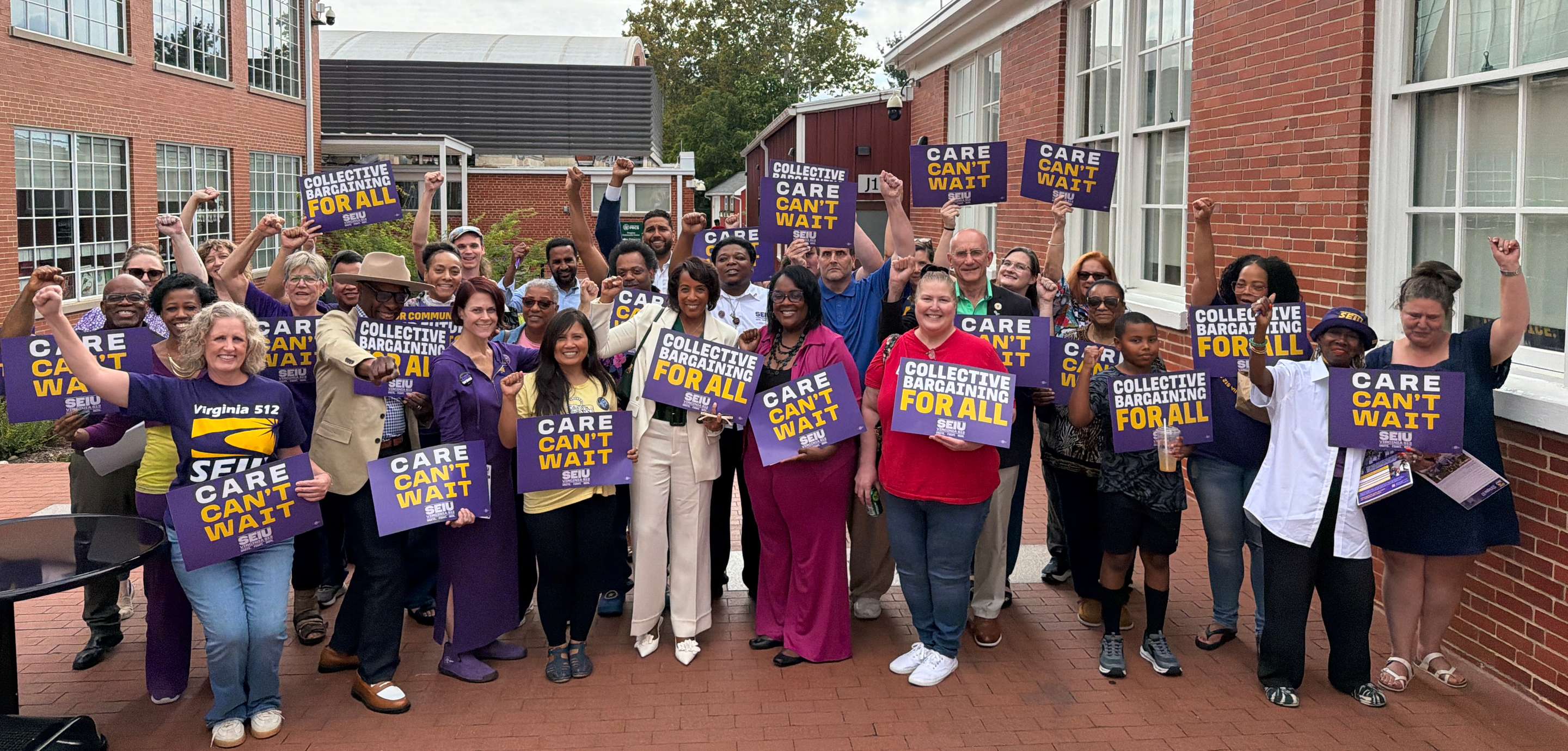
LEESBURG, VA – Workers and community members from across Loudoun County joined local elected officials Saturday for a town hall focused on one of the biggest challenges facing Virginia families: how rising costs are making it harder for the people who provide essential public services and care to afford to live and work in the communities that depend on them.
The event brought together county employees, home care workers, educators, firefighters and other community members to share their experiences and discuss collective bargaining as one tool to address affordability, to strengthen the workforce, and to improve the stability of essential public services. Loudoun County Board of Supervisors Chair Phyllis J. Randall and Vice Chair Michael R. Turner joined the conversation.
Participants were also encouraged to sign a statewide petition calling on Virginia elected leaders to support statewide collective bargaining rights for public service and home care workers: https://act.seiu.org/a/vacollectivebargaining-petition.
“Collective bargaining is really about having a voice,” said LaNoral Thomas, President of SEIU Virginia 512. “It means the people who teach our kids, care for our loved ones and keep our communities running can sit down together with their employers and have a say in their wages, benefits and working conditions. We’ve seen here in Loudoun what that can mean for workers and their families. That opportunity shouldn’t depend on your ZIP code. Public service and home care workers across Virginia deserve a voice on the job and the chance to build a stable life in the communities they serve.”
“Implementing collective bargaining in Loudoun County is one of the best decisions we have made. When workers have a voice in their wages, benefits, and working conditions, we strengthen our ability to retain experienced employees and build a stronger workforce. That helps our County provide better services and avoid the costs of constant turnover, rehiring, and retraining,” said Loudoun County Board of Supervisors Chair Phyllis J. Randall. “But we know this progress cannot stop here. Home care workers and public service workers across Virginia deserve the same opportunity to have a voice on the job. A rising tide lifts all boats, and Virginia needs a statewide collective bargaining law.”
Across Virginia, workers are confronting rising costs for housing, groceries, child care, transportation and health care at the same time communities are struggling to recruit and retain the workers who provide essential services. Organizers said those challenges are closely connected: When workers cannot afford to stay in their jobs or live in the communities they serve, families can have a harder time accessing the care and services they rely on.
“For four years, my family has struggled to find consistent care for my son. We’re supposed to have someone several times a week, and sometimes we’re lucky if someone comes once a month,” said Melissa Malone, a Loudoun County home care provider and mother of a 17-year-old who receives care through a Medicaid waiver. “Families like mine need reliable care, and care workers need good, stable jobs. Those things go hand in hand. If we want to attract and keep the caregivers our families depend on, we need to give them reliable pay, benefits and a voice on the job. That’s why collective bargaining matters.”
“For 28 years, I’ve worked alongside adults with disabilities and seen firsthand the difference that reliable, quality home care makes in people’s lives,” said Kate Campbell, a Service Coordinator with the Loudoun County Department of Mental Health and member of SEIU Virginia 512. “Home care allows people to stay in their homes, with their families and connected to their communities. We know here in Loudoun what a union contract can mean for workers — better pay, health insurance, paid leave and a real voice on the job. Home care workers and public service workers across Virginia deserve that same opportunity to build stable lives while doing the work our communities depend on.”
That pressure was reflected in stories shared by Loudoun-area residents ahead of the town hall. One Lovettsville caregiver and single mother said she works two full-time jobs “just to survive.” A Chantilly nurse said her water had recently been shut off for the second time because she could no longer keep up with her bills. And a Leesburg CNA working 40 hours a week said she still could not afford basic expenses. (Link to stories.)
Participants also discussed how collective bargaining works and the differences in bargaining rights for public employees across the Commonwealth. Virginia does not currently have a statewide collective bargaining law covering public employees. State employees are prohibited from collective bargaining, while local governments can decide whether to authorize it, or opt in.. Organizers are calling for statewide collective bargaining rights for public service and home care workers, arguing that workers’ ability to have a voice over wages, benefits and working conditions should not depend on where they live or work.
“I often say I was born into caregiving. I’ve been doing this work for more than 12 years, caring for someone I love and helping them live with dignity, independence and joy,” said Athena Jones, a home care worker and Chair of the Home Care Chapter of SEIU Virginia 512. “But caregivers across Virginia are struggling to afford housing, groceries and the basics for their own families. That is not a sustainable workforce, and it is not a sustainable care system. We have to make home care a job people can afford to stay in. Collective bargaining gives us a real voice in making that happen — and when we strengthen the workforce, we strengthen the care that Virginia families depend on.”
The issue is particularly urgent for Virginia’s home care workforce. Approximately 28,000 consumer-directed home care workers provide Medicaid-funded care to older adults and people with disabilities across Virginia. Home care workers help people with essential daily activities including eating, dressing, mobility and bathing, as well as other household and social supports (1). Virginia is projected to need an estimated 124,500 additional home care workers by 2032 as demand for care continues to grow (2).
Saturday’s gathering was the first in a series of town halls planned across Virginia this fall. Additional events are scheduled for Prince William County, Fairfax County, Richmond, and Norfolk. Additional information will be available in the coming days and weeks.
- The Commonwealth Institute for Fiscal Analysis, “Protecting Independence and Supporting Virginia Families Starts with Strong Home Care,” March 2026.
2. PHI, Workforce Data Center — Virginia 2022–2032 State Employment Projections
###
ABOUT SEIU Virginia 512
SEIU Virginia 512 stands firm in the belief that all working families deserve dignity, respect, fair wages, benefits, and a voice in the workplace. In 2026, we represent 18,000 workers, and we are working to organize over 28,000 more! SEIU Virginia 512 members advocate for good union jobs and justice for everyone in our community.